Industry
B2B · SaaS · Governance & Compliance
My Role
Product Designer · UX Researcher & Strategist · UI & Design Systems Designer
Year
2025
Tools
ChatGPT · Gemini · Figma · UX Pilot · Miro
TL;DR
Drove a mobile-first SaaS redesign in Figma, establishing scalable design systems that reduced user task time by 35%. Leveraged foundational user research and cross-functional engineering collaboration to resolve technical pain points and ensure platform-wide WCAG 2.1 accessibility compliance.

The Challenge
BoardSpace: Rich in Features, Overwhelming to Users
The web platform supported all essential governance board meeting functions, but many features were built solely from a single developer's perspective. Users consistently struggled with cluttered layouts, confusing minute-recording flows, and a document builder that didn't follow common design conventions.
"The rigid agenda builder and complex minute recorder created operational friction, increasing cognitive load and delaying executive decision-making by 15%."
— BoardSpace Stakeholder
Research & Insights
We utilized previous research data and made it actionable.
BoardSpace had a large archive of past user research. We reviewed user testing videos, transcripts, site architecture, and performance data to map task friction, pain points, and emotional trends — spotting where users were getting stuck and why it mattered.

Major Findings
- Overwhelming number of screens and clicks to complete tasks.
- Unintuitive and rigid agenda builder with no familiar document conventions.
- Hard-to-locate and time-consuming meeting minutes recording feature.
- Confusion about meeting statuses, document attachments, and user roles.
Research Methods
We used research methods to identify user frustrations and opportunities.
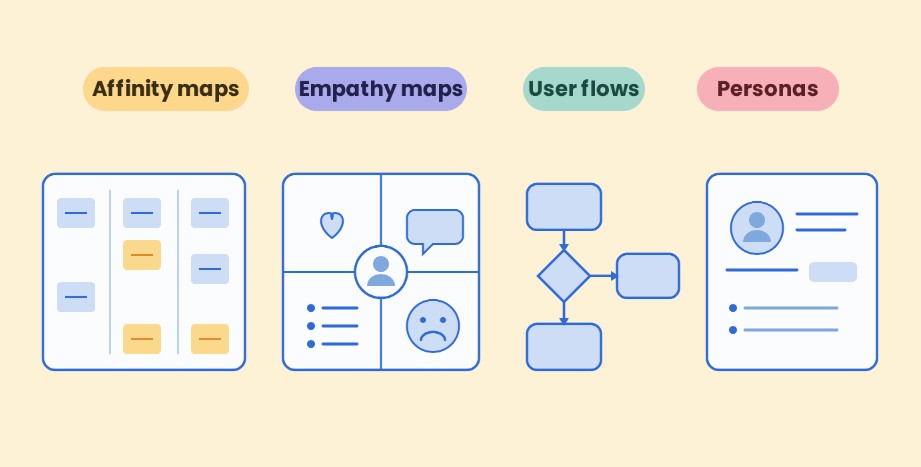
Affinity maps, empathy maps, user flows, and personas guided the team's understanding of user frustrations and improvement opportunities. These methods helped uncover pain points, clarify user needs, and identify areas where the experience could become more intuitive and efficient.
Want a more in-depth look at our research, insights, and process? Read more
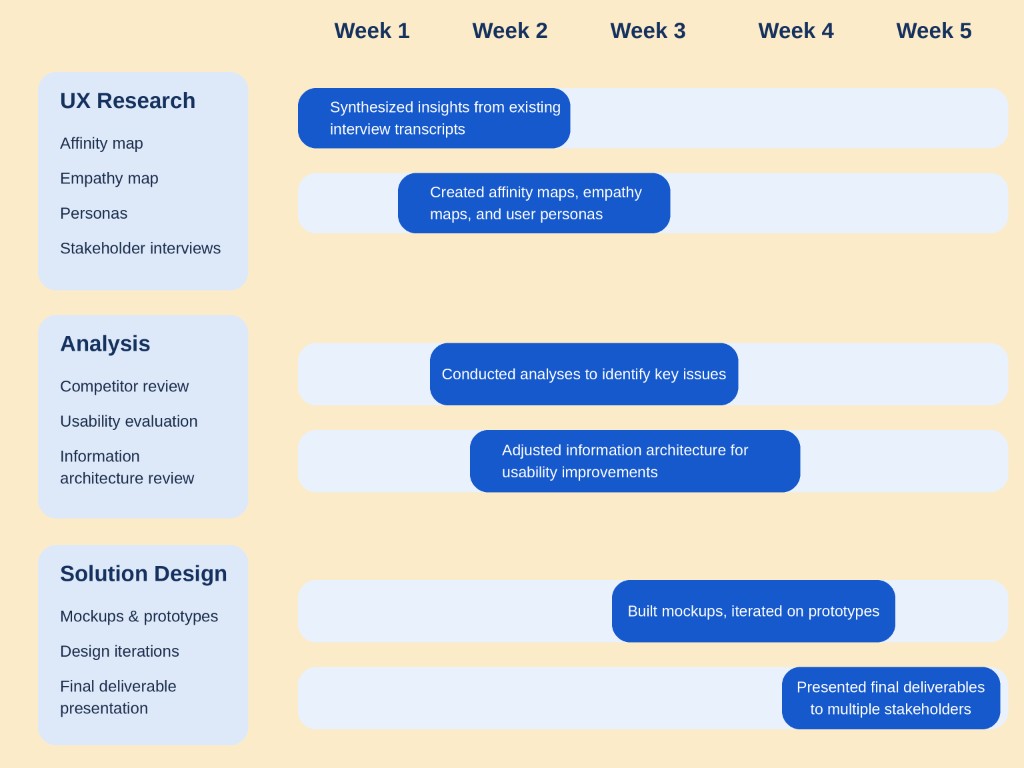
Project Scope & Timeline
My Role
As a UI/UX Designer, I participated with our team through each phase, from research to execution. I communicated design decisions with CEO Pat, built key portions of the prototype, and facilitated the final presentation.
Stakeholder Insights
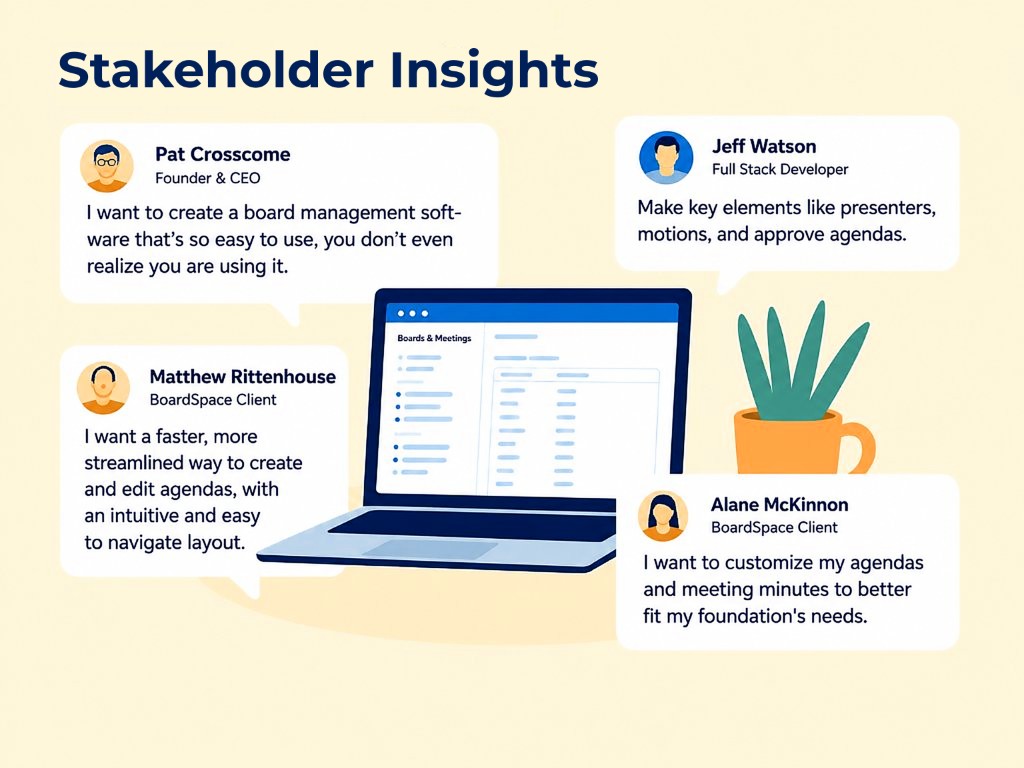
Weekly check-ins kept us aligned.
We held weekly meetings with BoardSpace stakeholders to validate insights, gather context, and ensure our redesign addressed key pain points. These touchpoints helped us refine solutions, prioritize usability improvements, and align our design with both user needs and business goals.
Market Scan
We analyzed our competitors.
Learning how other leading governance platforms handle structure, compliance, built-in tools, and role-based workflows was essential to accurately redesigning our flows.
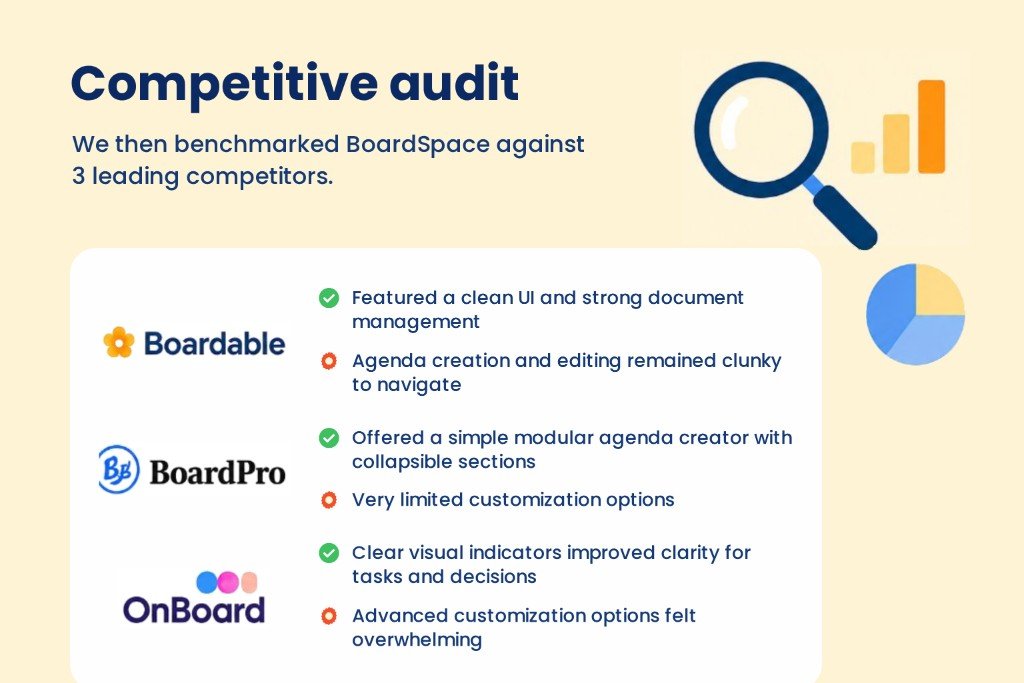
Boardable, BoardPro, and OnBoard were analyzed for structure, UX patterns, and workflow clarity.
Heuristic Audit
Before redesigning anything, we diagnosed the system.
We took a close look at BoardSpace's existing experience and identified usability violations based on Nielsen Norman's heuristic principles.
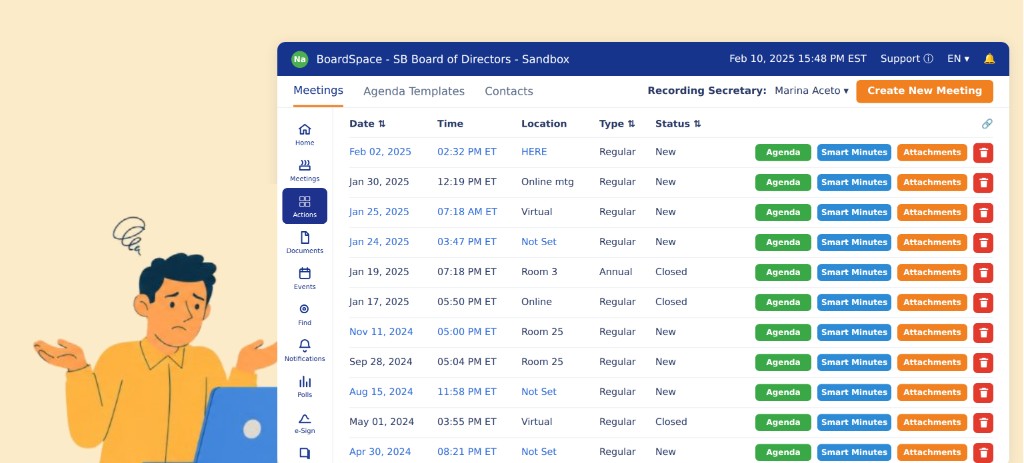
Legacy Meetings Landing Page

Violation: Aesthetic and minimalist design.
Multiple colors, columns, and buttons created visual hierarchy issues and confusion about which elements were most important.
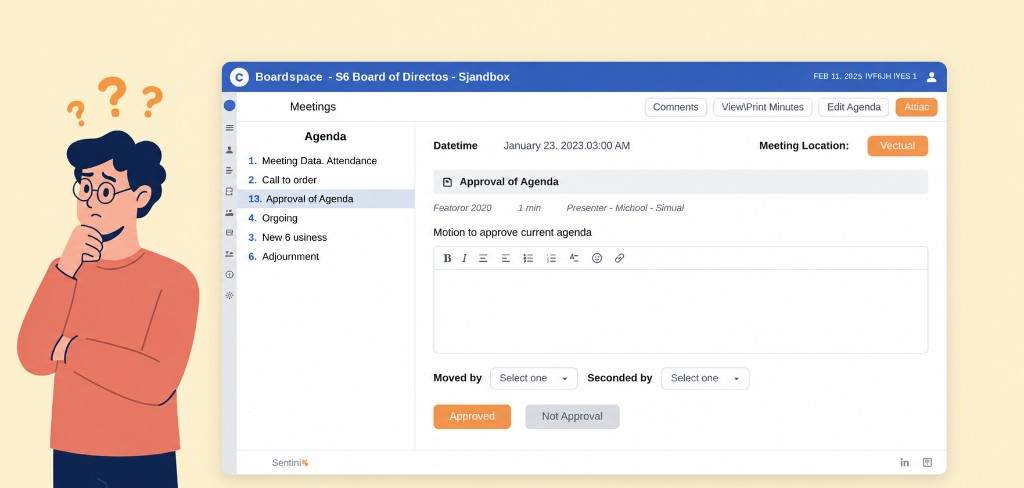
Legacy Agenda Document Builder
Violation: Match between the system and the real world.
The structure broke almost every expectation users had for a document builder, becoming the top source of IT support tickets.
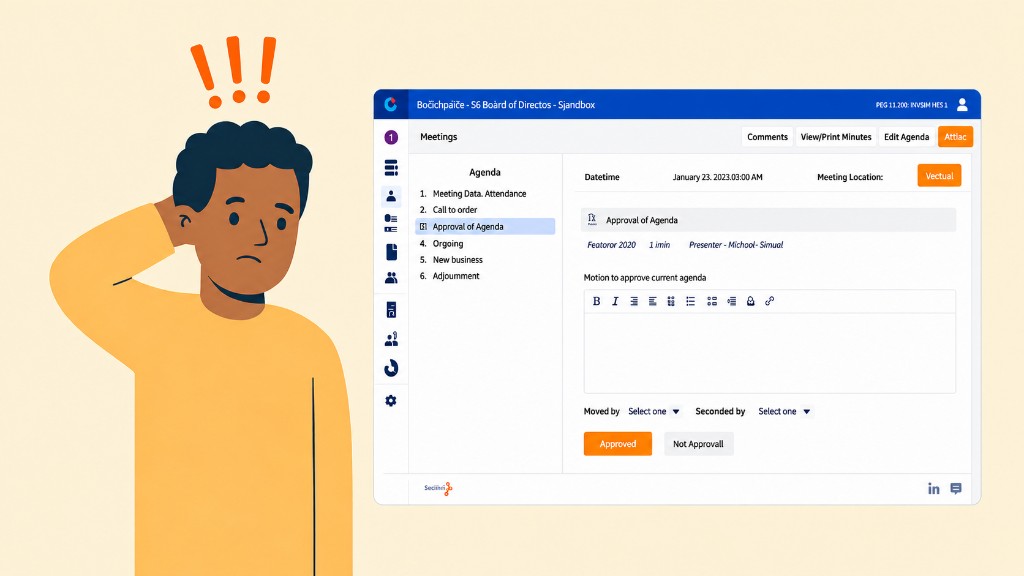
Legacy Minute-Recording
Violation: User control and freedom.
The minute-taking tool forced users to exit the flow to make basic changes, such as editing a presenter or an item's duration.
The Redesign
Simplifying agendas, meetings, and minute recording.
Pulling inspiration from competitor platforms, business feedback, and research insights shaped the redesign throughout the process. We built a fictional nonprofit board with roles, documents, and agendas to test how all the pieces fit together.
Modern Agenda Document Builder

Correction: Clearer Meeting Management
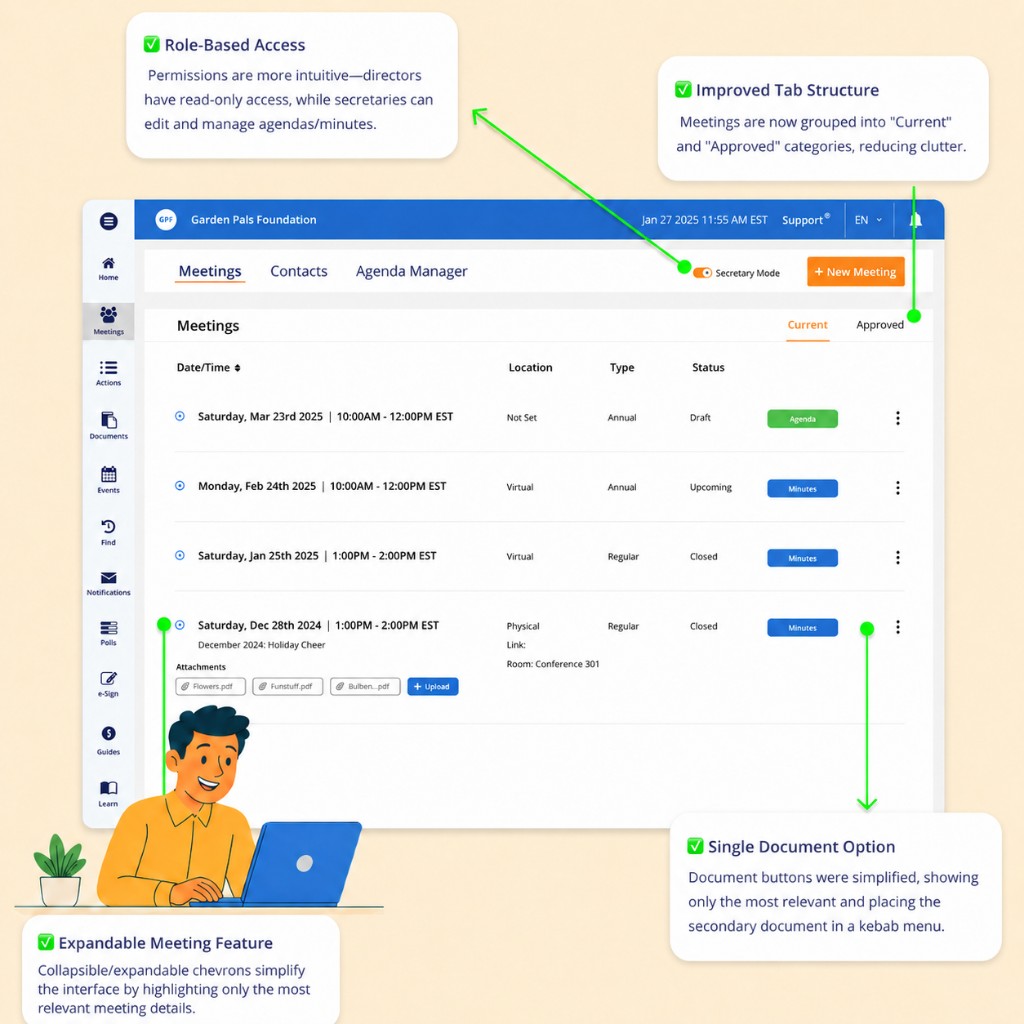
“Meetings” Home Page:
The redesigned Meetings Home Page provides users with a clearer and more structured way to manage meetings.
Correction: Modern Agenda Builder
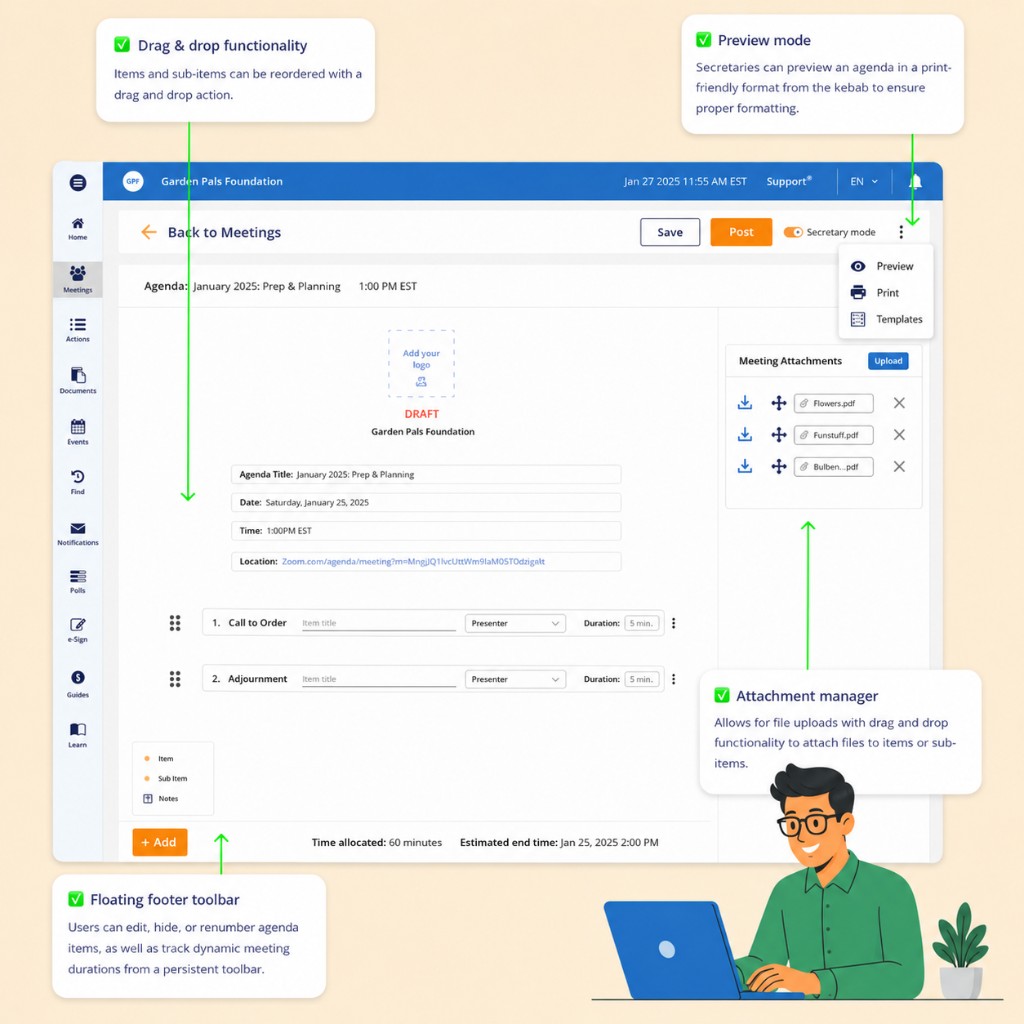
“Agenda Builder” Page:
The redesign focused on restructuring the experience to resemble more familiar document builder models, such as the Microsoft Word template picker.
Correction: Streamlined Minute-Taking
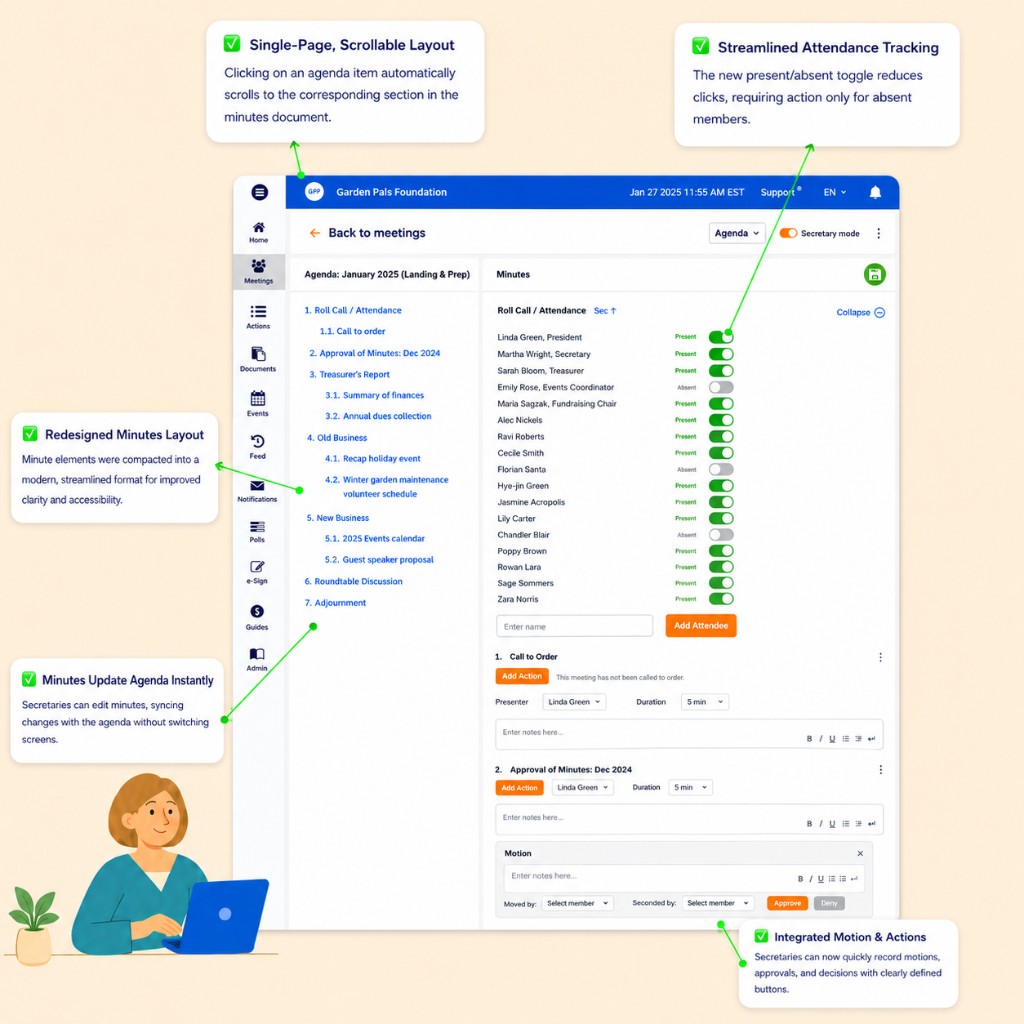
“Minute-Taking” Page:
The minute-taking process was one of the biggest pain points for users, requiring too many clicks and screens. Our redesign focused on consolidating actions into a single, scrollable view.
Correction: Director's Mode
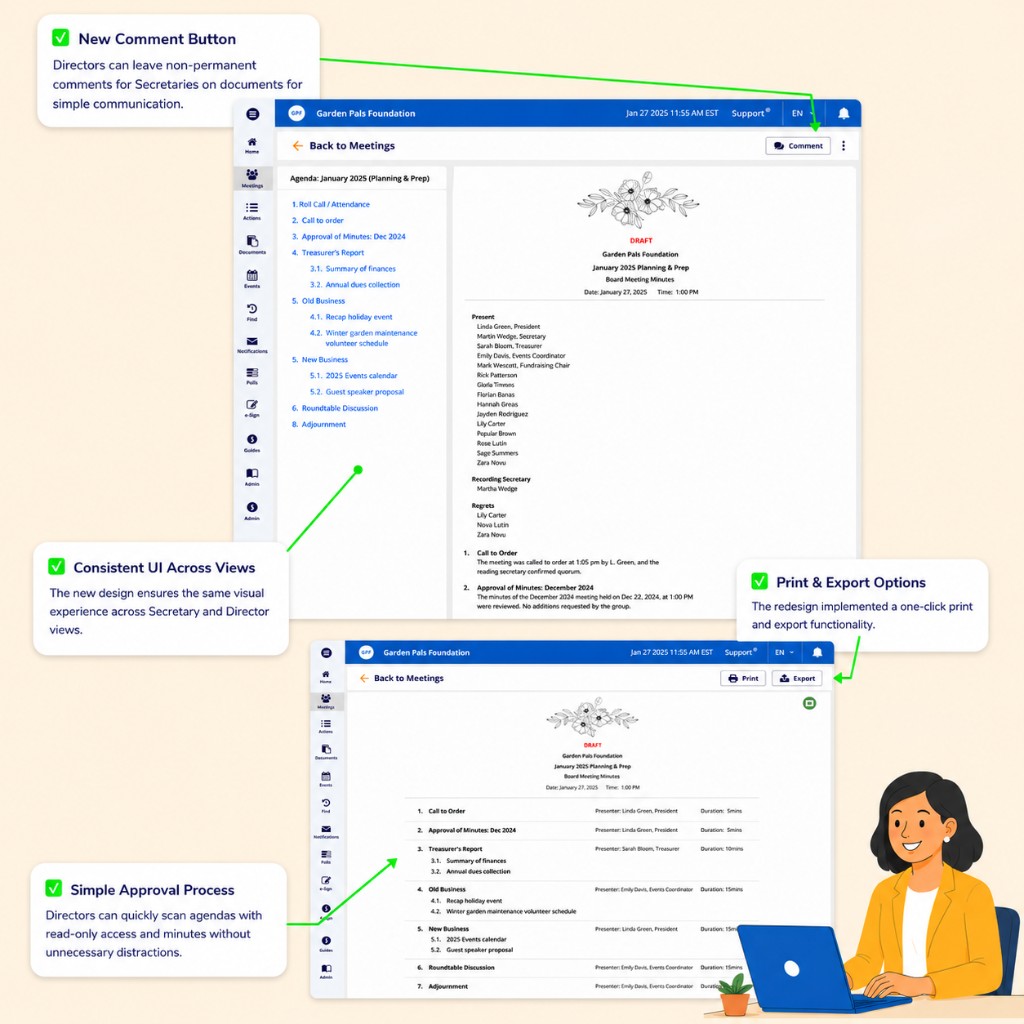
“Director’s Review” Page:
Since directors primarily need to review and approve meeting materials, we created a read-only version of the interface tailored to their needs.
Conclusion
Simplifying agendas, meetings, and minute recording.

This project was a deep dive into real-world UX challenges for the entire team, particularly in balancing niche user needs with existing system constraints. The team and I learned invaluable lessons,
Final Prototype
Our final prototype streamlined BoardSpace's core workflows, improving agenda creation and minute-taking. By utilizing user research, competitive analysis, and heuristic principles, we delivered a modern, efficient solution that the client loved and plans to integrate into their next system update.
Outcome
A cleaner, faster experience — now in production.
↓15%
Reduction in executive decision-making delays
3
Core tools redesigned & shipped
✓ Live
Now in production
Project Learnings
Teamwork, communication, ownership
As a UI/UX designer, this project taught me the importance of collaboration, communication, and ownership in a real-world UX process. As a UI/UX Designer, I worked with the team through each phase, from research to execution.
Stakeholder alignment, prototype building
Communicating with CEO Pat and developer Jeff helped me better understand business goals, technical constraints, and user needs. I also built key parts of the prototype, supported team alignment, and contributed confidently to the final presentation.